Fix Leaking Roof: What to Do Now and How to Repair It
A leaking roof needs quick attention, but the first goal is to limit water damage, not rush onto a wet roof. Move valuables, catch dripping water, and look for signs of spreading moisture in ceilings, walls, and attic spaces. Then, once conditions are safe, trace the leak back to its source. The drip may be far from the actual opening, especially around flashing, vents, valleys, or damaged shingles. Here’s how to protect your home now and plan a lasting repair.
💧Water travels fast. Damage often extends beyond the ceiling.
A leaking roof needs quick attention, but the first goal is to limit water damage, not rush onto a wet roof. Move valuables, catch dripping water, and look for signs of spreading moisture in ceilings, walls, and attic spaces. Then, once conditions are safe, trace the leak back to its source. The drip may be far from the actual opening, especially around flashing, vents, valleys, or damaged shingles. Here’s how to protect your home now and plan a lasting repair.
⚡ Key takeaways
Contain water, protect belongings, photograph damage, and arrange professional repair; temporary measures do not fix the source.
Treat bulging ceilings, rapid water entry, electrical moisture, storm damage, or visible openings as emergencies.
Never climb onto a wet roof or use tape, silicone, foam, or tarps as permanent repairs.
Ceiling stains often appear far from the entry point because water travels along roof layers and framing.
Inspect safely from ground level or the attic; flashing, valleys, vents, and pipe boots are common failure points.
Lasting repairs correct failed flashing, seams, drainage, or coverings, not just the visible water damage.
Act quickly when a roof leaks: contain water, protect belongings, document damage, and keep clear of electrical hazards or sagging ceilings. Never climb onto a wet or storm-damaged roof or rely on temporary sealants as a permanent fix. Because water can travel far from its entry point, a professional should trace flashing, vents, valleys, shingles, and membrane details to repair the true source.
Fix Leaking Roof: First Actions Inside Your Home
When you need to fix a leaking roof, begin inside your home. Contain the water, protect belongings, and document what you see before arranging a repair. These temporary steps can limit water damage, but they do not solve the cause of a leaking roof. Treat active dripping near electrical fixtures, a sagging ceiling, or fast-spreading stains as an emergency.
When a Roof Leak Is an Emergency
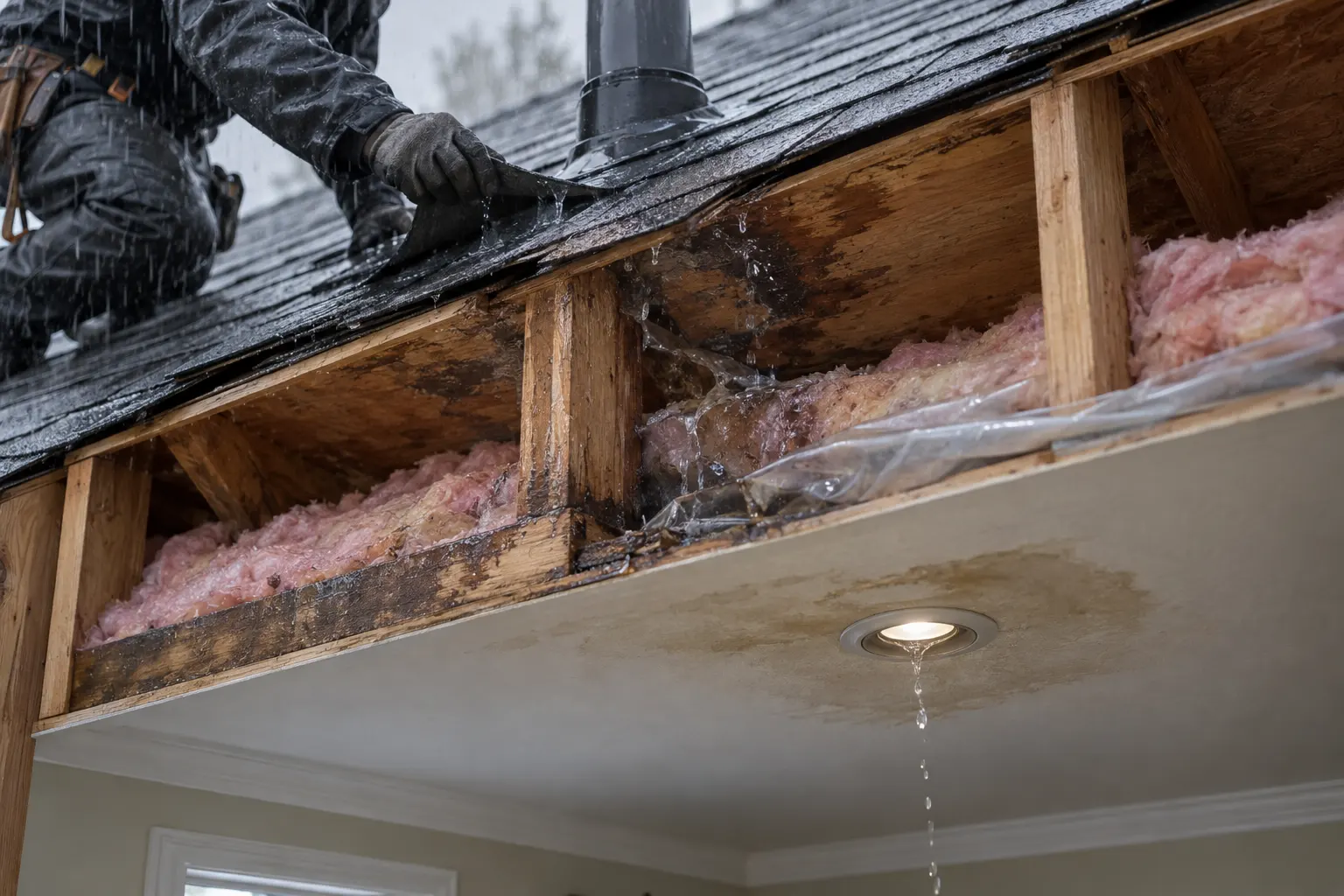
As a contractor, I tell homeowners that a roof leak becomes urgent when water is entering quickly, the ceiling is bulging, or moisture is near lights, wiring, outlets, or a breaker panel. Move people and pets away from the affected area, switch off power to that room only if you can do so safely, and place containers beneath drips. If a ceiling is holding water, do not stand below it; the weight can cause plasterboard to fail without warning.
Storm damage, a fallen branch, or an opening you can see from the attic also calls for emergency repair. Make your first call to a qualified professional who can safely assess the roof and install weather protection if needed. Photograph the damage from indoors, note when it began, and contact your insurer after the immediate risk is controlled.
Roof Leak Emergency Signs
Act immediately if water enters rapidly, the ceiling bulges, or leaks are near electrical fixtures, outlets, or the breaker panel.
Move people and pets away from the affected room, especially beneath a sagging or water-filled ceiling.
Turn off power to the affected room only when it is safe to do so; avoid wet electrical areas.
Place buckets or containers beneath drips to limit interior damage, without standing under weakened ceiling material.
Seek urgent help after storm damage, fallen branches, or visible roof openings seen from inside the attic.
Call a qualified roofing professional first for a safe assessment and temporary weather protection.
Photograph indoor damage, record when the leak began, and notify your insurer once immediate hazards are controlled.
What Not to Do While Fixing a Roof Leak
Do not climb onto a wet roof, especially during rain, wind, darkness, or immediately after a storm. I have seen well-intentioned homeowners turn a manageable repair into an injury and a larger insurance claim. Avoid using silicone, tape, expanding foam, or a tarpaulin from a ladder as a permanent answer; these materials can trap water, conceal the source, and complicate a proper inspection.
Inside, do not ignore a stain simply because dripping has stopped. Leaks can travel along rafters, insulation, pipes, and ceiling linings before becoming visible. Do not paint over marks, run ceiling fans into damp cavities, or use electrical equipment near wet areas. Instead, contain the water, lift furniture and rugs clear, photograph conditions, and allow a roof professional to identify the entry point before fixing the roof.
Find the Leak Source, Not Just the Drip
A ceiling stain tells us where water emerged, not necessarily where the problem began. At Fix Leaking Roofers, an experienced roofer will find the leak source by tracing the path water took across your roof, through its layers and into the home. That approach leads to repairs that stop a roof leak rather than simply hiding the evidence.
Why Water Travels Through Your Roof
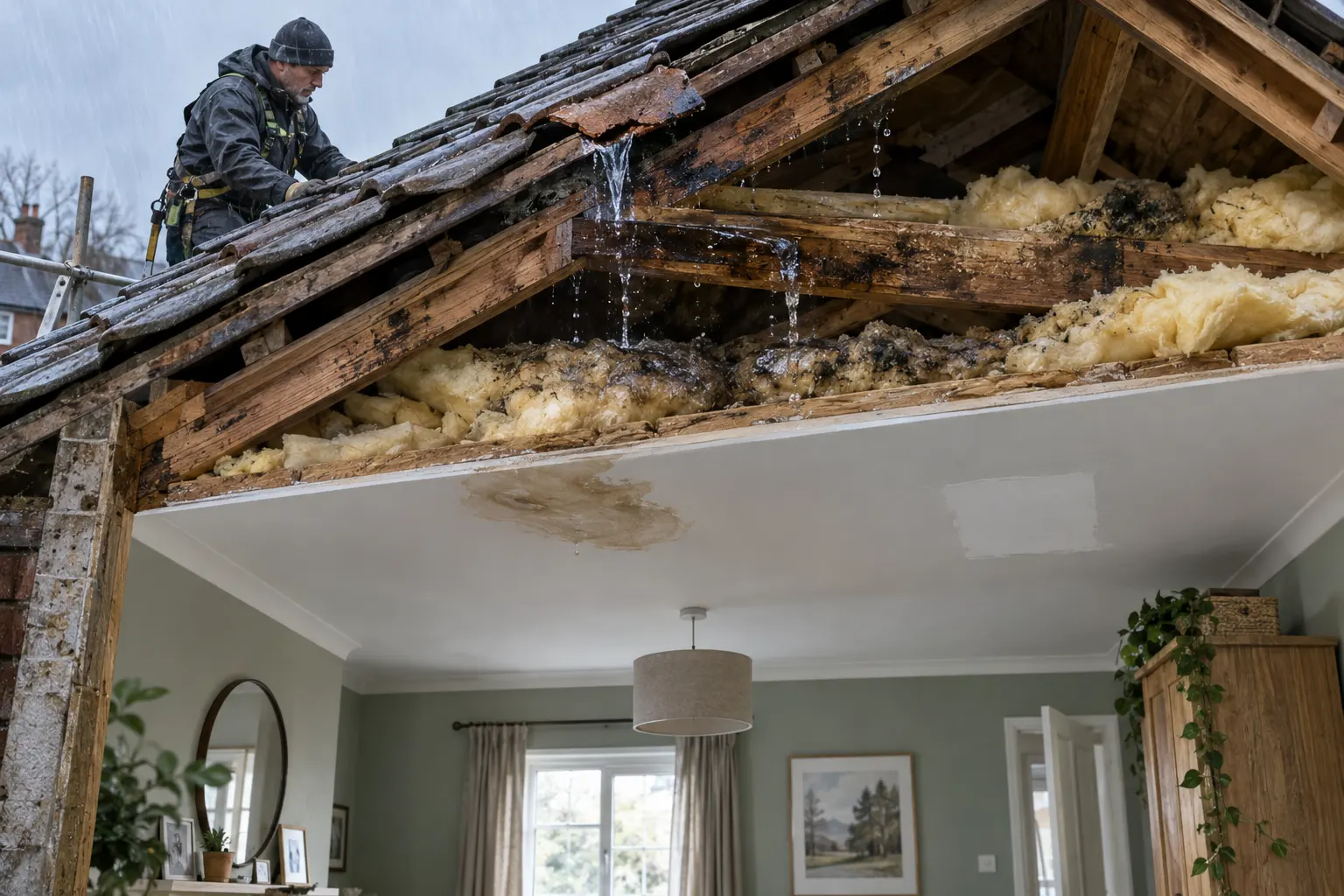
Water rarely enters and falls straight down. Once it gets beneath a shingle, tile, seam or metal edge, it can follow the roof deck, framing, insulation, wiring or vapour barrier before appearing several feet away indoors. Gravity matters, but so do wind pressure, roof pitch and the way materials overlap.
That is why a stain near a light fitting may relate to a failed detail higher up the slope, not the area directly above it. Small roof leaks can remain hidden for a long time, allowing wet insulation, timber decay and mould conditions to develop. By the time visible water damage appears, the affected area may be wider than expected.
When we investigate leaking roofs, we look for fresh staining, softened decking, disturbed materials and openings around penetrations. A careful diagnosis protects the roof structure and helps avoid replacing sound materials unnecessarily.
Safe Ways to Inspect Flashing, Vents and Membrane
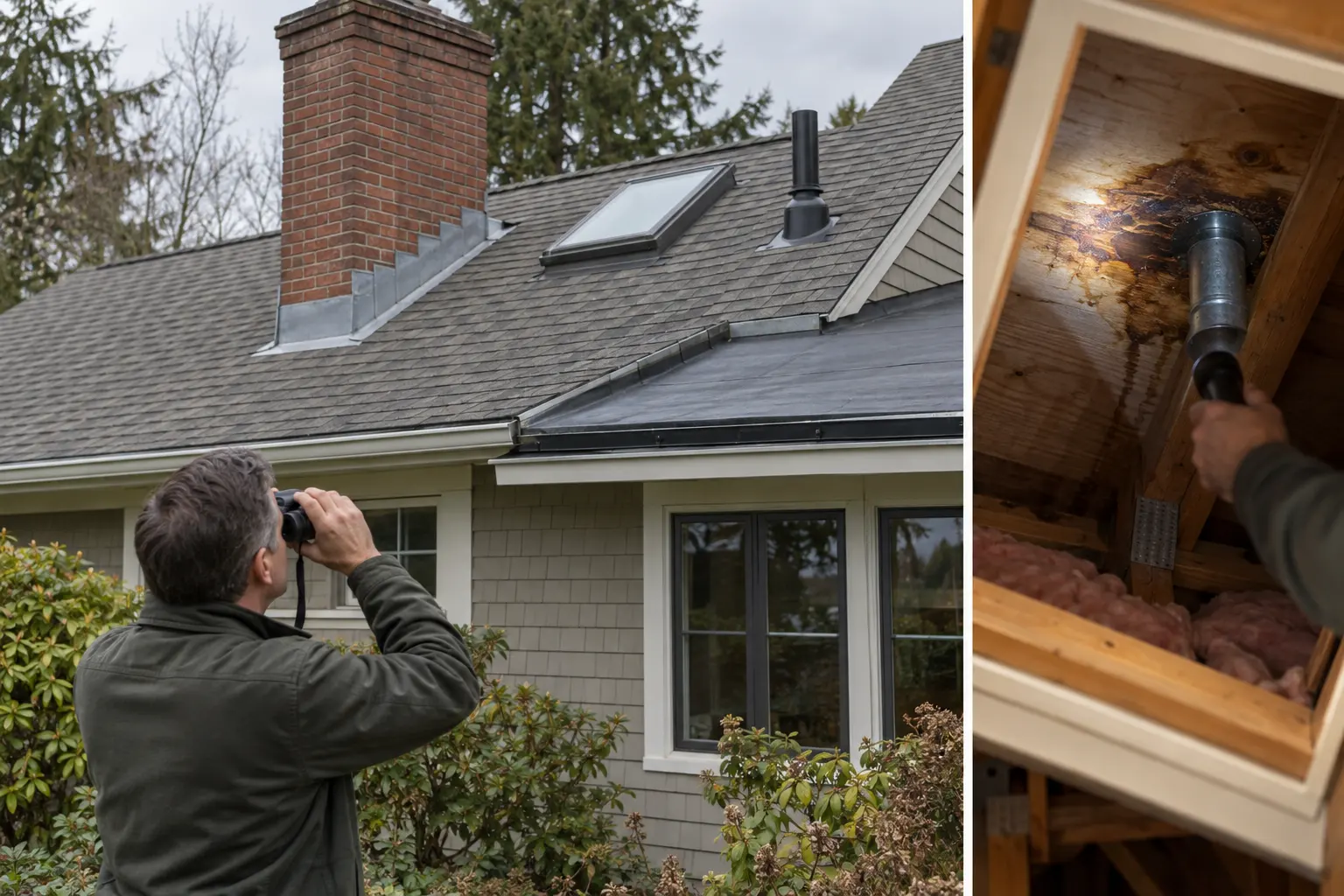
Start from the ground where possible. Binoculars and a flashlight in the attic can reveal lifted flashing, missing sealant, cracked pipe collars, blocked drainage paths or staining beneath roof penetrations. Avoid walking on a wet, steep or fragile roof; a fall or broken covering can turn a modest repair into a larger problem.
Pay close attention to roof flashing where surfaces meet: chimneys, walls, skylights, valleys and dormers. Flashing should direct water outward in overlapping layers, not depend solely on caulk. Around each vent, check whether the boot, cap and surrounding materials sit securely. Loose vents and split collars are frequent entry points.
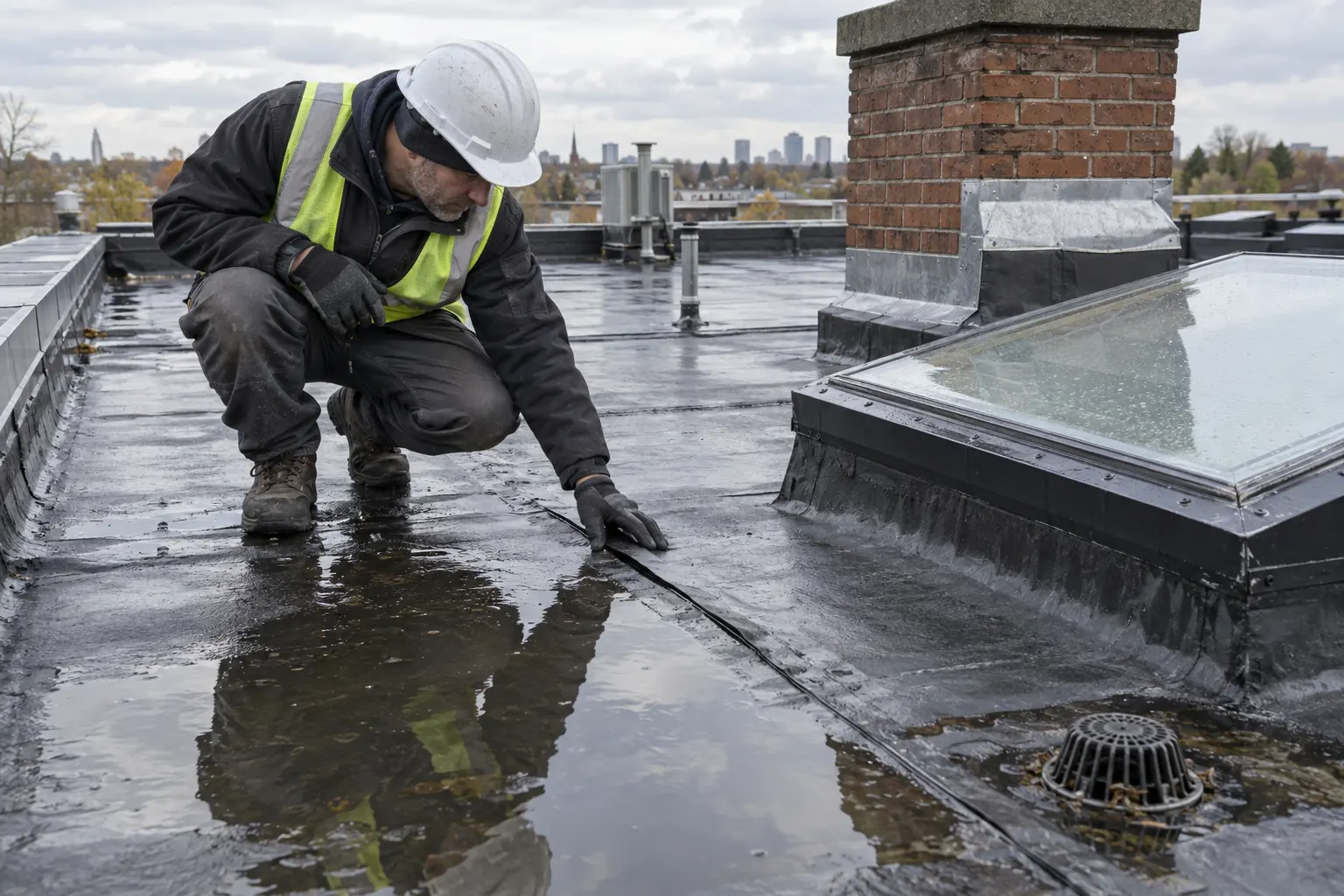
On low-slope systems, inspect the membrane for open seams, punctures, pooling and edge separation. An EPDM membrane may look intact from a distance while a lifted seam admits water during wind-driven rain. If the source is unclear, we recommend a professional inspection rather than probing or patching at random.
Common Roof Leaks and What They Point To
Roof leaks rarely begin where water appears indoors. As a repair contractor, I trace the leak source by following water’s path through the roof assembly, not by guessing at a stain. Small leaks can point to worn seals, displaced materials, drainage issues, or hidden damage that deserves prompt attention.
Shingles, Roof Flashing, Valleys and Penetrations
On shingle roofs, the most vulnerable details are usually transitions rather than the field of the roof. Missing, cracked, or lifted shingles can admit water, but roof flashing around walls, dormers, pipes, and step transitions is often the real concern. Flashing must direct water onto the surface below; if it is corroded, improperly lapped, or sealed with failing mastic, water can slip behind it.
Valleys also deserve close inspection because they carry concentrated runoff. Debris, exposed fasteners, worn valley metal, and deteriorated underlayment can all create a recurring leak. Around a plumbing pipe or attic vent, a split rubber boot may be the issue. We repair leaks by correcting the failed detail, not simply applying sealant, so the roof repair holds through changing weather.
Skylights, Chimneys and Flat Roof Membrane
Skylight leaks are frequently blamed on the glass or frame, yet the surrounding flashing and roofing layers are commonly at fault. Chimneys present a similar challenge: cracked mortar, a damaged cricket, or failed counterflashing can allow water behind the roof covering. We inspect these areas from the roof and, when needed, from the attic to separate a roofing issue from condensation or masonry-related moisture.
For flat and low-slope roofs, look closely at the membrane, seams, drains, and edge details. An EPDM roof may develop open seams, punctures, loose terminations, or ponding-water damage over time. This is especially important on commercial properties, where a small breach can affect insulation and interior finishes before it becomes visible. A proper leak repair identifies the wet area, restores the membrane system, and addresses the drainage condition that contributed to the failure.
Temporary Roof Patch and Water Control
When rain gets through, the first job is to limit exposure, not pretend the roof is permanently repaired. At Fix Leaking Roofers, a roofer can use a properly secured tarp, durable sheeting, or a compatible roof patch to divert water until conditions allow lasting work. Roof sealant can support a small, dry-area temporary fix, but it is not an emergency repair plan for every leak.
Drying Inside After a Leaking Roof
Once water is entering the home, protect people and finishes before worrying about cosmetics. Move furniture, rugs, electronics, and valuables away from the affected area, then place buckets beneath active drips. If water is near lights, switches, or electrical equipment, turn off power to that area only if it is safe to do so and call an electrician where needed.
Water damage can continue after the rain stops. Open windows when outdoor humidity permits, run fans and dehumidifiers, and remove wet insulation or ceiling material only when it can be done safely. A bulging ceiling may hold a significant volume of water; keep clear of it and arrange professional help rather than puncturing it overhead.
Take photos of the damage, note when the leak appeared, and schedule roof maintenance promptly. We inspect the roof and the inside moisture path, because the visible stain is not always directly below the failed roof area.
Indoor Drying Safety Checklist
Move furniture, rugs, electronics, and valuables away from wet areas before damage spreads.
Place buckets beneath active drips and protect nearby flooring with towels or waterproof coverings.
Turn off power only when safe if water is near lights, switches, outlets, or electrical equipment.
Open windows when outdoor humidity is lower, then run fans and dehumidifiers to reduce moisture.
Keep clear of bulging ceilings; they may hold heavy water volumes and require professional attention.
Document stains, leaks, and damaged materials with photos, including when the problem first appeared.
Schedule prompt roof inspection to trace the moisture path and prevent further interior damage.
Permanent Roof Repair: Repairing the Entry Point
A lasting roof repair starts at the point where water enters, not at the ceiling stain below. At Fix Leaking Roofers, we inspect the roof covering, flashings and drainage path before repairing the fault. The right repair may involve re-securing damaged tiles/slates, replacing failed components, or fitting similar material that matches the existing roof.
Why a Ceiling Patch Cannot Fix a Roof Leak
A ceiling patch can make a room look better, but it cannot stop a roof leak. Water may travel along rafters, insulation, felt or wiring before it appears indoors, so the stain is rarely a reliable marker for the source. Painting, filling or replastering over damp material can also trap moisture and allow staining, mould and timber deterioration to continue unseen.
Proper leak repair begins outside. We trace the water route, check the condition of tiles, slates, valleys, leadwork, chimneys and roof penetrations, then fix leaking roof defects at their origin. Once the roof is watertight and the affected area has dried properly, a ceiling repair becomes worthwhile. A roof patch has a place for a small, clearly identified local defect, but it must be compatible with the surrounding covering and securely detailed against wind-driven rain. Treating the entry point first protects the property rather than simply hiding the evidence.
Ceiling Patch vs Roof Leak Repair: What Each Step Addresses
Action
What It Addresses
What It Cannot Do
When It Becomes Appropriate
Ceiling patch
Improves the appearance of a stained or damaged ceiling.
Stop a roof leak or identify the true water entry point; water may have travelled before appearing indoors.
After the roof is watertight and the affected area has dried properly.
Roof repair
Fixes roof defects at their origin by tracing the water route and checking coverings, valleys, leadwork, chimneys and penetrations.
Restore the appearance of an already damaged ceiling without separate interior repair.
First, before painting, filling, replastering or repairing the ceiling.
Local roof patch
Addresses a small, clearly identified local roof defect.
Provide a suitable repair where the defect is unclear or replace a securely detailed, compatible roof repair.
When it matches the surrounding covering and is securely detailed against wind-driven rain.
Document Roof Leak Damage for Insurance
When a roof leak causes water damage, good documentation can make the insurance process far less stressful. At Fix Leaking Roofers, we advise homeowners to begin recording the damage before any non-essential cleanup or repair work starts. Take clear, well-lit photos and video of the affected roof area where safe to do so, along with ceiling stains, damp insulation, peeling paint, damaged flooring, and any belongings affected by water. Capture wide shots for context, followed by close-ups that show the extent of the issue.
Keep a simple timeline and save supporting records, including:
When you first noticed the leak and the weather conditions
When you contacted your insurer
Every emergency step taken to limit further damage
Invoices, receipts, contractor reports, and correspondence
The cost of any temporary protection or emergency services
If you need temporary protection such as a tarp or water extraction, your insurer may need evidence that the work was necessary to prevent the loss from worsening.
We also recommend arranging a professional roof inspection as soon as conditions allow. Our written assessment can identify the likely source of the roof leak, describe visible damage, and outline the repair work required. Clear records help your adjuster understand what happened and help ensure the roof repair and water damage repairs are considered on the facts, not assumptions.
Insurance Documentation Checklist
Photograph and film all damage before non-essential cleanup begins, using wide context shots and detailed close-ups.
Record ceiling stains, wet insulation, peeling paint, damaged floors, belongings, and safe-to-access roof areas.
Keep a dated timeline covering leak discovery, weather conditions, insurer contact, and emergency mitigation actions.
Save invoices, receipts, contractor reports, emergency service records, and all correspondence with your insurer.
Document temporary measures, such as tarping or water extraction, to show they prevented additional damage.
Arrange a professional roof inspection promptly and retain the written assessment of leak source and repairs needed.
Preventing Roof Leaks Before the Next Storm
As roof repair contractors, we know most roof leaks do not begin during a dramatic storm. They start quietly: a lifted shingle after high winds, aging sealant around a pipe, a small gap in flashing, or debris holding water where it should drain away. By the time water reaches a ceiling or wall, the repair may involve far more than the roof itself.
The most reliable fix is regular maintenance before wet weather arrives. We recommend looking over your roof from the ground after strong winds, checking gutters for overflow, and paying close attention to areas where different materials meet. Flashing around chimneys, skylights, valleys, and walls deserves particular care, as do vents and other roof penetrations. These are practical weak points, not automatic signs that your roof needs replacement.
If you notice missing shingles, cracked seals, staining in the loft, or water marks indoors, arrange an inspection promptly. A targeted repair can often stop a small issue from becoming timber rot, damaged insulation, or interior water damage. Professional services can identify the cause early and provide a clear cost for the work needed. At Fix Leaking Roofers, we believe good roof care is straightforward: identify the source, repair it properly, and keep an eye on the details that protect your home when the next storm arrives.
Frequently asked questions
What should I do first when my roof starts leaking?
Place buckets or containers under drips, move furniture, rugs, and valuables away from the area, and photograph the damage. Avoid climbing onto the roof or using electrical equipment near water. Arrange a professional inspection to locate and repair the source.
Is a leaking roof an emergency?
It is an emergency when water is entering quickly, the ceiling is bulging or sagging, moisture is near lights or wiring, or storm damage has created an exposed opening. Keep people away from the affected room and contact a qualified roof repair professional.
Can I fix a roof leak from inside the attic?
You may be able to contain water and identify visible staining from the attic, but an interior patch does not repair the roof entry point. Water can travel along framing and insulation, so the exterior roof detail still needs inspection and repair.
Why is my ceiling leaking in a different place from the roof damage?
Water often travels beneath shingles, flashing, roof decking, insulation, or framing before it appears indoors. The ceiling stain marks where water emerged, not always where it entered, so a professional should trace the full water path.
What are the most common causes of roof leaks?
Common causes include damaged or missing shingles, failed flashing, cracked pipe boots, open membrane seams, blocked valleys, worn sealant, loose vents, and damage around chimneys, skylights, walls, or dormers.
Should I put a tarpaulin or sealant over a leaking roof?
Temporary weather protection may be needed after storm damage, but it should be installed safely by a professional. Silicone, tape, foam, and surface sealant can hide the issue or trap water when used as a lasting repair.
Will homeowners insurance cover roof leak damage?
Cover depends on the policy and cause of the damage. Sudden storm damage may be covered, while deterioration or deferred maintenance may not be. Photograph conditions, record when the leak began, limit further damage, and contact your insurer promptly.